
Physical Environment Audits
HealthOps Environment of Care Audits give hospital leaders a structured, cross-functional view of conditions that can create safety, compliance, and survey-readiness risk. We assess the physical environment and the operational controls that support it, helping teams identify gaps, assign ownership, and act before a finding, event, or unannounced survey forces a last-minute response.
Unlike ESD Crosschecks, which focus specifically on verifying Environmental Services performance, EOC Audits look across the systems that shape the patient-care environment. Depending on your facility’s priorities, reviews can include environmental conditions, life safety, emergency preparedness, security, hazardous-material controls, staff competency, medical equipment documentation, and related departmental practices.
HealthOps translates broad Environment of Care requirements into a practical audit process: inspect the conditions, document the gaps, identify the responsible teams, and provide a clear path to corrective action. The result is more than a survey-preparation checklist—it is an ongoing tool for managing environmental risk and operational readiness.
Environment of Care readiness, made actionable.
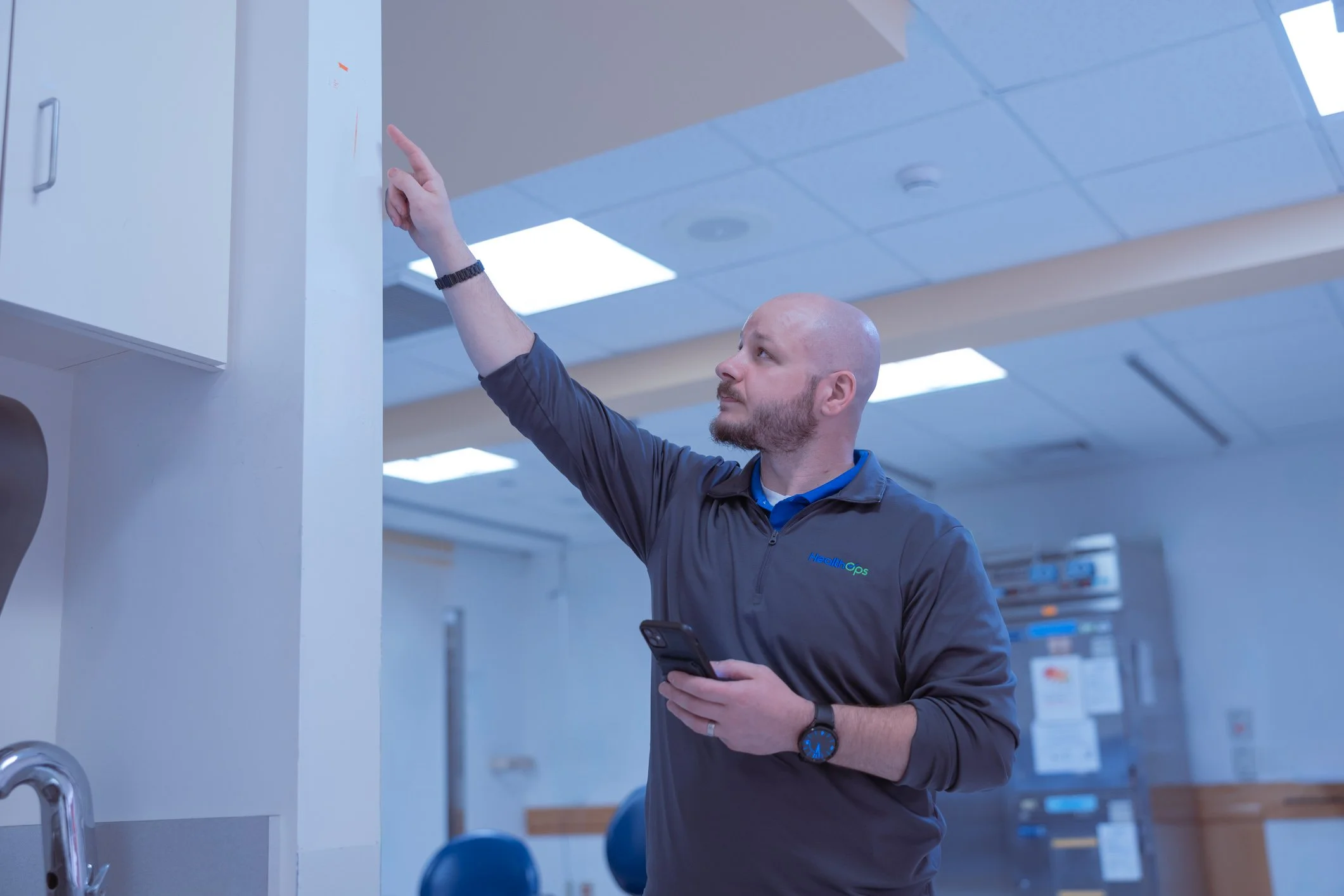
What the audits assess
General environment and interior-space readiness: Conditions such as damaged ceilings, walls and flooring; lighting; signage; valve shutoff identification; and vent-filter conditions that affect the safety and suitability of patient-care spaces.
Environmental Services and infection-prevention practices: Environmental cleanliness, EVS Crosschecks, black light auditing, spill-kit readiness, and other operational controls that support clean and safe care environments.
Fire and life safety: Fire extinguishers, fire doors, emergency lighting, egress pathways, sprinkler-related readiness, and other controls that support emergency response and safe evacuation.
Biomedical equipment oversight: Preventive-maintenance dates, equipment-inventory integrity, and documentation associated with alternative equipment maintenance programs and manufacturer instructions for use.
Safety and hazardous materials: Chemical inventory, hazardous chemical handling and storage, safety showers and related inspections, fit testing, and spill-kit program readiness.
Security, utilities, and staff readiness: Access-control practices, visitor and external-worker protocols, emergency procedures, utility-system labeling and testing, HVAC and water-system controls, and staff competence.
From observations to accountable action
An EOC Audit should not end with a list of deficiencies. HealthOps organizes findings into practical, actionable priorities so the appropriate departments can address the work with clearer ownership and urgency. That may mean resolving a physical-environment concern, updating a policy, improving documentation, strengthening staff education, or coordinating follow-up across departments such as EVS, Engineering, Biomed, Safety, Security, Food Services, Materials Management, and Transportation.
This cross-functional approach matters because Environment of Care readiness is rarely owned by one department. It depends on the everyday consistency of the teams, systems, documentation, and physical spaces that support patient care.
Built around known risk areas
Joint Commission citation data from May 2024 through May 2025 highlights several Environment of Care areas where hospitals commonly face exposure: interior-space safety and suitability with 865 citations, utility-system control labeling with 785, utility-system testing with 684, cleanliness of the environment with 615, and hazardous chemical handling and storage with 611. HealthOps uses these patterns to help hospitals focus audit attention where compliance gaps are most likely to matter.